What’s happening to our homes?
In this monthly round-up, Sam Spencer highlights five stories on key housing issues we are tracking.
by
04 Jun 2026

In May alone, there have been multiple policy developments, new data sets and media reports exploring the condition, performance, energy efficiency and resilience of the UK’s existing homes.
In this monthly round-up, Sam highlights five stories on key housing issues we are tracking.
In this monthly round-up, Sam highlights five stories on key housing issues we are tracking.
Surveying standards still under review
The condition and long-term performance of existing homes remains a major focus in the UK, including how we survey these properties.
It was confirmed by RICS that the second edition of its Home Survey Standard is still under review, following consultations last year on proposed updates to reflect changing market needs, consumer expectations and developments in technology.
The RICS standard is designed to ensure consistent, high-quality residential surveys across the UK. It also reflects growing attention around issues such as energy efficiency and retrofit assessments, and the way that surveys and valuations are increasingly being viewed as tools for understanding long-term housing risk and future investment requirements, rather than simply supporting individual transactions.
An update on the standard, and on a proposed home survey regulatory scheme, is expected soon.
It was confirmed by RICS that the second edition of its Home Survey Standard is still under review, following consultations last year on proposed updates to reflect changing market needs, consumer expectations and developments in technology.
The RICS standard is designed to ensure consistent, high-quality residential surveys across the UK. It also reflects growing attention around issues such as energy efficiency and retrofit assessments, and the way that surveys and valuations are increasingly being viewed as tools for understanding long-term housing risk and future investment requirements, rather than simply supporting individual transactions.
An update on the standard, and on a proposed home survey regulatory scheme, is expected soon.
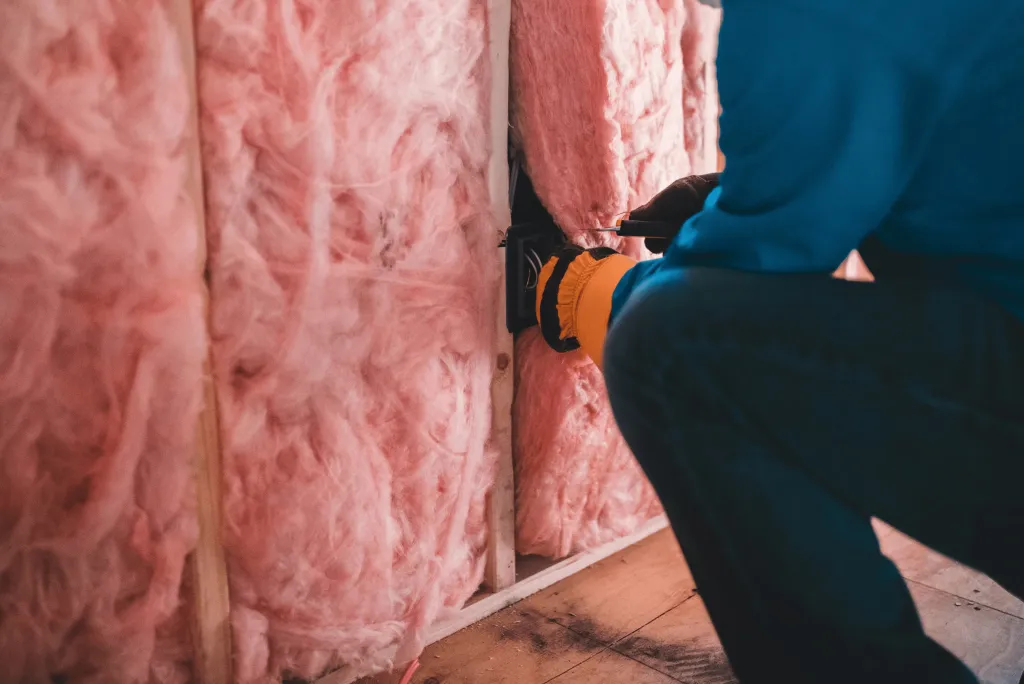
Understanding home insulation
In the meantime, a useful fact sheet on home insulation has been published to accompany the latest official statistics of the English Housing Survey (EHS).
The fact sheet provides some insight into how well homes are insulated and the profile of households living in homes with low levels of insulation. For example, while more than half (54%) of dwellings now have cavity or solid wall insulation, the data shows that older properties continue to lag behind. In 2024-25, over 2.7 million households were living in homes with less than 100mm of loft insulation – and a million of those households contained someone with a long-term illness or disability.
The survey also revealed wider housing quality concerns: about 4 million homes failed the Decent Homes Standard in 2024 and 2.3 million contained a Category 1 hazard. The EHS Headline Report observed that around 823,000 dwellings in 2024 had serious condensation or mould.
The fact sheet provides some insight into how well homes are insulated and the profile of households living in homes with low levels of insulation. For example, while more than half (54%) of dwellings now have cavity or solid wall insulation, the data shows that older properties continue to lag behind. In 2024-25, over 2.7 million households were living in homes with less than 100mm of loft insulation – and a million of those households contained someone with a long-term illness or disability.
The survey also revealed wider housing quality concerns: about 4 million homes failed the Decent Homes Standard in 2024 and 2.3 million contained a Category 1 hazard. The EHS Headline Report observed that around 823,000 dwellings in 2024 had serious condensation or mould.
Future-proofing homes for a warmer climate
Keeping warm at home is a major challenge for those in fuel poverty. But now, so is keeping cool. Overheating problems and climate adaptation are becoming a bigger part of the conversation surrounding existing homes.
It is estimated that the number of UK homes with air conditioning has doubled to more than 4 million in just three years, driven by rising summer temperatures and increasing demands for better indoor comfort.
Alongside this, the Climate Change Committee has warned that almost all UK homes could face life-threatening levels of overheating by 2050 without urgent changes, including more shading, insulation upgrades and renewable-powered cooling technologies.
It is estimated that the number of UK homes with air conditioning has doubled to more than 4 million in just three years, driven by rising summer temperatures and increasing demands for better indoor comfort.
Alongside this, the Climate Change Committee has warned that almost all UK homes could face life-threatening levels of overheating by 2050 without urgent changes, including more shading, insulation upgrades and renewable-powered cooling technologies.

Renters' Rights Act also promotes improved conditions
One of the biggest housing changes in May was the implementation of the Renters' Rights Act for England’s private rented sector.
While much of the media focus has been on the way the Act changes tenancy agreements, rent increases and evictions, the reforms also reinforce greater expectations on housing quality, resident experience and long-term management standards.
Housing conditions, energy performance and building safety are under scrutiny, and landlords and housing providers are under pressure to show that existing homes are being better maintained, managed and improved to higher standards.
While much of the media focus has been on the way the Act changes tenancy agreements, rent increases and evictions, the reforms also reinforce greater expectations on housing quality, resident experience and long-term management standards.
Housing conditions, energy performance and building safety are under scrutiny, and landlords and housing providers are under pressure to show that existing homes are being better maintained, managed and improved to higher standards.
EPC accuracy in the spotlight again
May 2026 also saw the publication of a 2025 report produced by UCL Energy Institute and Alan Pither into the accuracy of energy performance certificates (EPCs).
As suspected, EPCs tend to overestimate energy demand by around 16% for gas heated homes, and much more for electrically heated homes.
The report provides further evidence to support the government’s plans to improve EPC accuracy via more dynamic data updates, refined modelling assumptions, and better assessor practices, particularly as the system transitions toward the new Home Energy Model. EPC reforms are urgently required to support almost all other policies that touch on housing conditions and performance.
But interestingly, as government reports go, this one must be one of the very few to contain a philosophical ‘prologue’. It quotes George Box: “All models are wrong, but some are useful”. Quite.
As suspected, EPCs tend to overestimate energy demand by around 16% for gas heated homes, and much more for electrically heated homes.
The report provides further evidence to support the government’s plans to improve EPC accuracy via more dynamic data updates, refined modelling assumptions, and better assessor practices, particularly as the system transitions toward the new Home Energy Model. EPC reforms are urgently required to support almost all other policies that touch on housing conditions and performance.
But interestingly, as government reports go, this one must be one of the very few to contain a philosophical ‘prologue’. It quotes George Box: “All models are wrong, but some are useful”. Quite.
What this all means
From tackling poor housing conditions and adapting homes to a changing climate, to responding to new regulations and rising consumer expectations, we are all being challenged to think more strategically about the existing housing stock.
As the year progresses, the organisations that understand and respond to these challenges early will be best placed to meet societal expectations for safer, more efficient and more resilient homes for the future.
As the year progresses, the organisations that understand and respond to these challenges early will be best placed to meet societal expectations for safer, more efficient and more resilient homes for the future.
04 Jun 2026